
The Unsung
The heroes we choose, and why

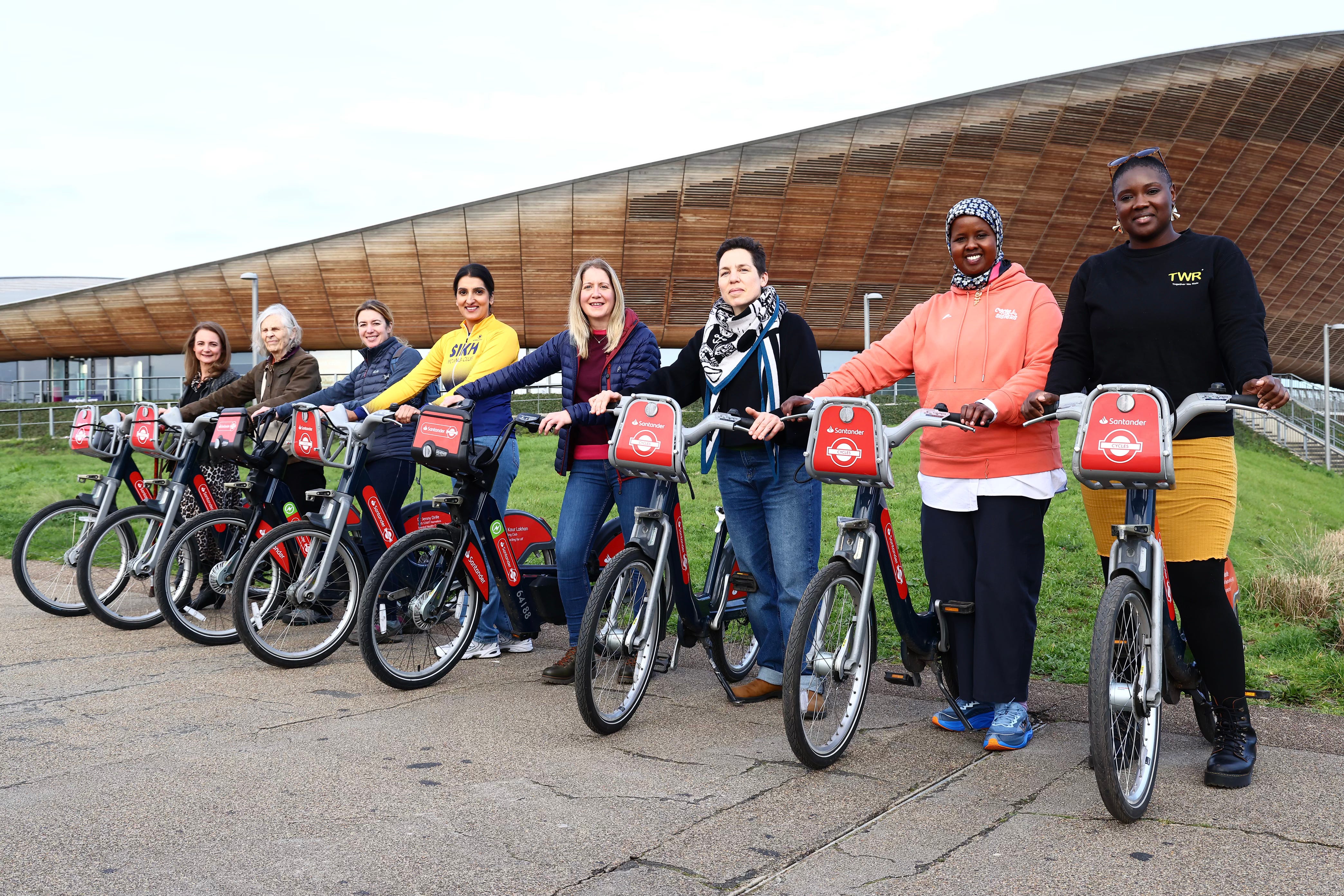
Last week I was invited to London for an event in the Olympic Park. Ten of the Santander hire bikes – you know, the ones that most people still call ‘Boris bikes’ – have been renamed for “unsung heroes” of the cycling community, to celebrate International Women’s Day.
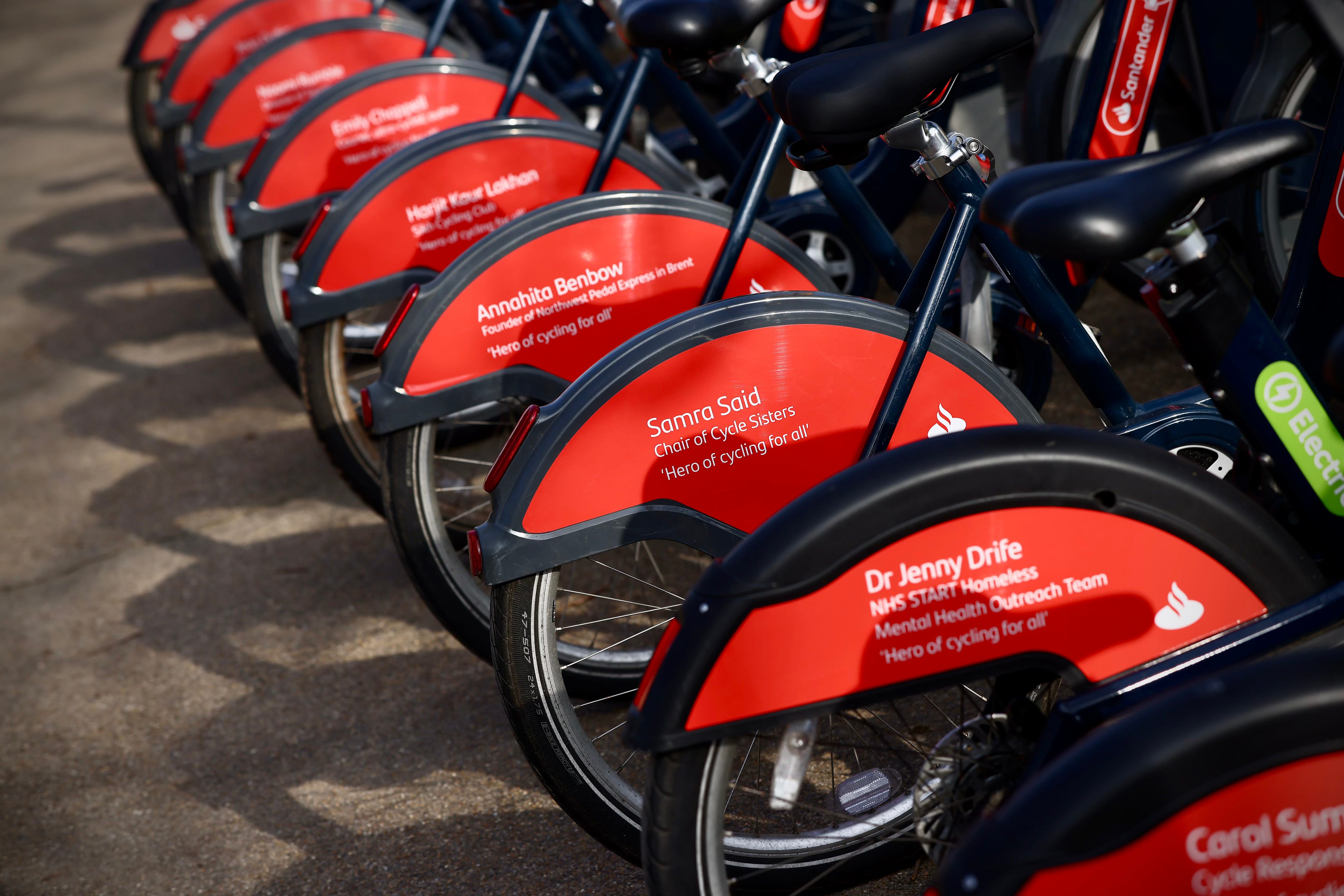
And I was one of them – as was my friend Samra Said, who was also recognised as an “unsung hero” at last year’s Sports Personality of the Year Awards, for her work as chair of Cycle Sisters. Alongside us were a pleasingly diverse array of women, most of whom I hadn’t even heard of before we found ourselves on a list together.
It’s easy to be cynical about events like this (it was, after all, really just a very low-budget stunt devised by a marketing team), but I also found several aspects of it quite powerful. Just the sheer act of recognising these women – printing their names on bikes, getting them all together in the same place, issuing a press release about them – seemed to make a statement about what work is important; who we should be paying attention to.
And I loved how diverse we all were. It’s comparatively rare, in cycling, to meet people who are doing it very differently from you. I already knew of Samra and Naomi’s work, but I hadn’t come across Annahita, who leads a bike bus in Brent, or Jenny, a consultant psychiatrist who works with rough sleepers, and uses the bike to reach them, since many can’t or won’t come to appointments. I was delighted to meet Carol, who’s been working as a bicycle paramedic for the last 20 years, and Jean, who has been campaigning for better cycling policy and infrastructure for a similar length of time.
I’ve made the point before (and I’ll make it again), that it’s people like this who are the real heroes of cycling – not the self-serving, self-promoting individuals who win the races, set the records and court the headlines.
And please don’t read this as self-deprecating, or rush to reassure me, but I felt far less entitled to be there than everyone else. I don’t deny that people have found my contribution to cycling useful in some ways, I can’t argue with the fact that a panel chose me out of 150 nominees, and I was happy and honoured to be recognised – but most of the things I’m celebrated for, I did for myself. I don’t think my work really compares to that of someone who has spent countless hours leading rides, teaching people to cycle, escorting kids to school, patiently and meticulously working to change policy, or in the case of Jenny and Carol, directly saving people’s lives.
I’ve begun to accept though, that perhaps we need both kinds of hero – and that, in fact, there are all sorts of ways in which a person can be seen as heroic and, probably, many obscure yearnings in all of our private souls that mean we seek heroes in the first place. After all, when I look at the people who are currently celebrated in our culture, I find as many nurses, firefighters, soldiers and teachers as I do people like Hercules, Batman, Ernest Shackleton and Dervla Murphy. I often enjoy leafing through books in the Little People, BIG DREAMS series, which introduces children to a very wide range of heroes and role models – a random selection includes Rosa Parks, Alan Turing, Dolly Parton and Lenny Henry.
It’s no longer just the grizzled explorers and warmongers we seek out – and as I delve into it, I realise it’s not just the saintly nurses and sporting underdogs either. Our culture actually has a real penchant these days for the ‘unsung’ – just look at Beryl Burton, who seems to be as famous for having been unjustly forgotten, as she does for her exceptional sporting achievements.1
The psychology of why we nominate these people as heroes seems quite complex.
As well as celebrating their work, we’re implicitly celebrating their modesty: someone who has (to use Jean Dollimore as an example) spent decades patiently compiling data for a local cycling campaign was certainly not seeking the limelight in the way that others do when they break a world record, or produce a film about their expedition. The people we call unsung heroes are doing what they do for the ‘right’ reasons.
Celebrating them reflects well on ourselves. It shows we have the right values when, by naming these people as our heroes, we demonstrate that we can see beyond the spectacle of daredevils like Alex Honnold, and recognise what’s ‘really important’.
And arguably we also call someone a hero when we feel they’re treated unfairly, or inadequately compensated for the work they do. The most obvious example of this is how we spoke about nurses during the early days of the COVID pandemic – and there are now whole research papers that discuss just how problematic that was:
“The hero discourse is not a neutral expression of appreciation and sentimentality, but rather a tool employed to accomplish multiple aims such as the normalization of nurses’ exposure to risk, the enforcement of model citizenship, and the preservation of existing power relationships that limit the ability of front-line nurses to determine the conditions of their work.”2
My insistence that people like Harjit and Terry and Annahita are the real heroes comes from a similar impulse. I get a lot more recognition for my work than most, and it’s hard not to feel guilty about that, especially when I see how hard some people are working, and how much more laborious their task is than writing Instagram captions and sharing selfies. I make enough money out of my writing and guiding and speaking and brand partnerships that I don’t have to have a conventional job – but most of the volunteers who are the backbone of the cycling community also work full-time in other careers. It’s this unfairness, I think, that is one of the reasons I try to swing the spotlight round to them at every opportunity – regardless of whether they asked for it.
I don’t want to come across as too critical – or worse, cynical. Because I was delighted to be singled out as a hero last week. I’m very happy to think that there is a bike making its way round London with my name on it, and that occasionally people might spot it and send me a photo. I feel proud of my achievements, and although my first impulse is to deny and deflect, I know that my work over the years has made a difference.
But I can’t stop thinking about the people we decide to call our heroes, and why my own personal pantheon includes individuals as varied as Philippa York, my dad, Jan Morris, Skin from Skunk Anansie, and loads of people you haven’t heard of because they run tiny community groups that never make the headlines.
If you have time to leave a comment, I’d really like to know who your heroes are. And, more importantly, the reasons why.
ANNOUNCEMENT
Speaking of heroes, I am very happy to announce that I will be hosting a series of events in April where I get to interview everyone’s favourite food writer, the great Felicity Cloake. (She also rides bikes, is good company, and has written a novel (!!), which comes out in May. I’ve read it, and can confirm that you’re all going to love it.)
We’ll be appearing at:
Gosforth on the 14th April (tickets here)
York on the 15th April (tickets here)
Settle on the 16th April (tickets here)
Tickets are already selling briskly, so don’t delay. We’ll also potentially be cycling between venues, so please also hit me with your route suggestions.
This week’s recommendation
Final Draft on Netflix. This is a Japanese gameshow where retired athletes from a wide range of sports compete to see who is ultimately the strongest. It’s well-designed, both visually and as a concept, and in between watching the athletes putting themselves through impressive (and often excruciating) physical challenges, we get to hear them having heartfelt conversations about how one copes in the aftermath of a sporting career. The format does have its flaws, most notably the way the female athletes are included (they compete alongside the men, and are all eliminated pretty early on), but as gameshows go it’s a good one, and I kept exclaiming over how I’d love to see it brought to the UK, so we could watch Tom Daley battling against Laura Kenny, and see how the curlers measure up against the skeet shooters.
Until next week,
Emily
From Mohammed S, Peter E, Killackey T, Maciver J. The “nurse as hero” discourse in the COVID-19 pandemic: A poststructural discourse analysis. Int J Nurs Stud. 2021 May;117:103887. (Read it here.)
How wonderful to know that there's a Santander bike with your name on it, Emily! I wonder if anyone will be so inspired by your example that they attempt the Transcontinental on it...
We all need people who inspire us. But like you I struggle with the word 'hero'. Perhaps it's because it has become a cliche, loved by tabloid reporters. Billionaire footballers are routinely called heroes for winning a game. It's like the British honours system, which rewards huge numbers of time-serving politicians with knighthoods, while handing out lower baubles to people who do amazing things for their local community. I hesitate to suggest the phrase role model as an alternative, as that sounds like corporate jargon, but it may be more apt in many cases.
PS: the head of comms for the company I used to work for joked that someone could never receive an 'unsung' award twice as after the first they were now 'sung'...
Thank you @Emily Chappell for the friendship, the feature, and the memorable ride last Tuesday. I certainly don’t see myself as a hero, unsung or otherwise and I have a lot more to reflect on about that, though I know we may chat about it soon.
Despite how I feel about the word, I’m so grateful to see you celebrated in this way. You are truly inspirational to me. I admire your story, your adventures, and the confidence you instil in all of us to take up space.
Enjoy this moment. The way I see it, we’re celebrating how the people who nominated us see us and that’s something I never take for granted.
Thank you for riding my bike & letting me ride yours. That memory will stay with me.